Projects |
PolySpaceVR
Lightweight, customizable VR social hub for small groups that I designed, engineered, and shipped on the Meta Quest Store.
PolySpaceVR is a VR social platform purpose-built for intimate, customizable gatherings. I started the project to explore how lightweight networking, avatars, and spatial audio can make remote hangouts feel less like meetings and more like living-room conversations.
Problem
Most social VR products sit at one of two extremes: large public worlds that are great for serendipity but noisy for small groups, or enterprise collaboration tools that feel efficient but sterile. PolySpaceVR was my attempt to design a middle ground for friend groups, study sessions, and lightweight community events.
The goal was not to win on scale. It was to make small-group presence feel warm, customizable, and technically reliable on commodity VR hardware.
Product Strategy
- Comfortable performance: Low-poly art direction, baked lighting, and GPU instancing keep framerate high on standalone Meta Quest devices.
- Modular spaces: Environment templates use ScriptableObjects so creators can remix layouts, props, and lighting without touching core code.
- Social presence: Customizable avatars, spatial audio falloff, and shared interactables (whiteboards, card tables, media surfaces) make small gatherings playful.
My Role
- Owned the product concept, core engineering, and shipping path from prototype through store release.
- Implemented Photon networking to keep voice chat, avatar poses, and interactables synchronized for up to eight participants.
- Built the in-headset world builder, creator tooling, and moderation hooks needed to make the product usable by hosts rather than just developers.
Key Tradeoffs
- Prioritized stable framerate and comfort over higher-fidelity visuals, which is why the product leans into low-poly art direction and tightly controlled scene complexity.
- Capped the experience around small groups because intimacy and reliable synchronization mattered more to the concept than maximizing room size.
- Open-sourced the codebase to encourage community extension, while still adding moderation primitives like mute, soft kick, and invite lists so hosts could keep spaces usable.
Outcomes
- Open-sourced the project so educators and hobbyists can host their own Poly Spaces without vendor lock-in.
- Documented creator guidelines that supported monthly community drops on the store listing.
- Used the platform for internal dogfooding sessions at Holos and as an early reference point for the kind of intimacy-focused social spaces I wanted to design professionally.
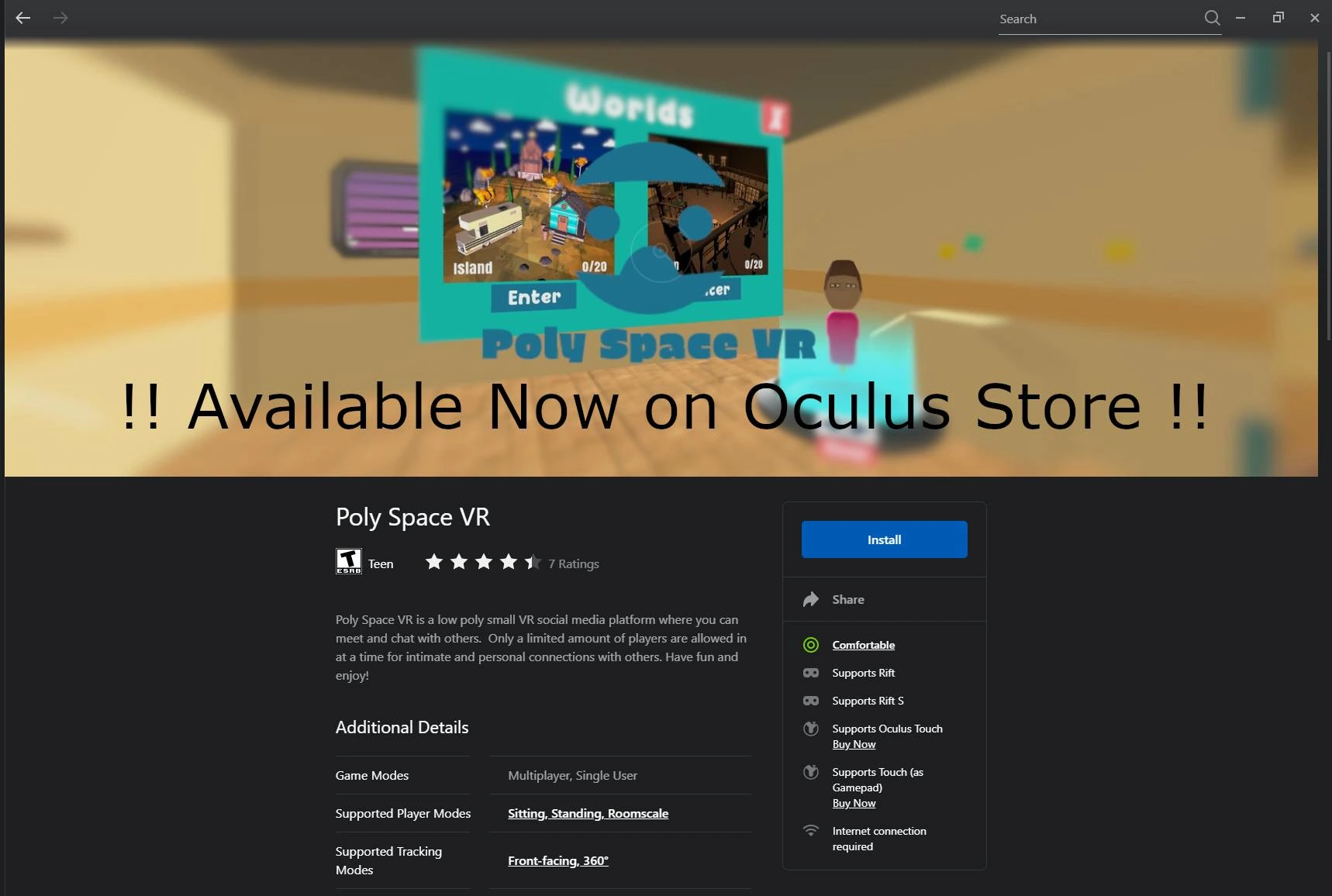
PolySpaceVR started as a response to a gap I felt in the market, but it became equally valuable as a sandbox for testing how networking, world-building tools, moderation, and social presence need to fit together. That systems-level thinking has carried into the more structured social spaces I have designed professionally.
