Jack Yang: Real-time AI for real conversations.
 I’m Jack Yang, a software engineer at Microsoft Teams AI building real-time multimodal agents for Microsoft 365 Copilot. Before that, I built avatar and XR systems for Microsoft Mesh.
About

- Now
- Software Engineer II, Microsoft Teams AI
- Before
- Microsoft Mesh, Holos
- Studying
- M.S. in Computer Science (HCI), Georgia Tech
- Based in
- Seattle
I build real-time AI agents at Microsoft Teams AI, where I work on Facilitator, the Microsoft 365 Copilot agent that runs inside live Teams meetings. My focus is the orchestration, tool execution, context management, and multimodal features that let an agent keep up with a conversation as it happens.
Before Teams AI, I engineered the shared UI framework adopted by every product team at Microsoft Mesh and was a key contributor to its avatar rendering pipeline, shipping weekly in 20+ languages to millions of users. Earlier, I built AR/VR interaction and multiplayer systems at Holos, a Techstars startup, and helped it secure a $750K U.S. Air Force contract.
Outside work, I created FakeHaul, an AI-generated marketplace where every checkout is $0.00, covered by The New York Times and Fast Company. I’m also completing an M.S. in HCI at Georgia Tech, with a paper under review at CHI 2027 on how AI systems that track decisions from transcripts can hide their own mistakes. I enjoy connecting low-latency systems with generative models, and I care as much about how the interaction feels as how the system is built.
Selected work
All 7 projects-
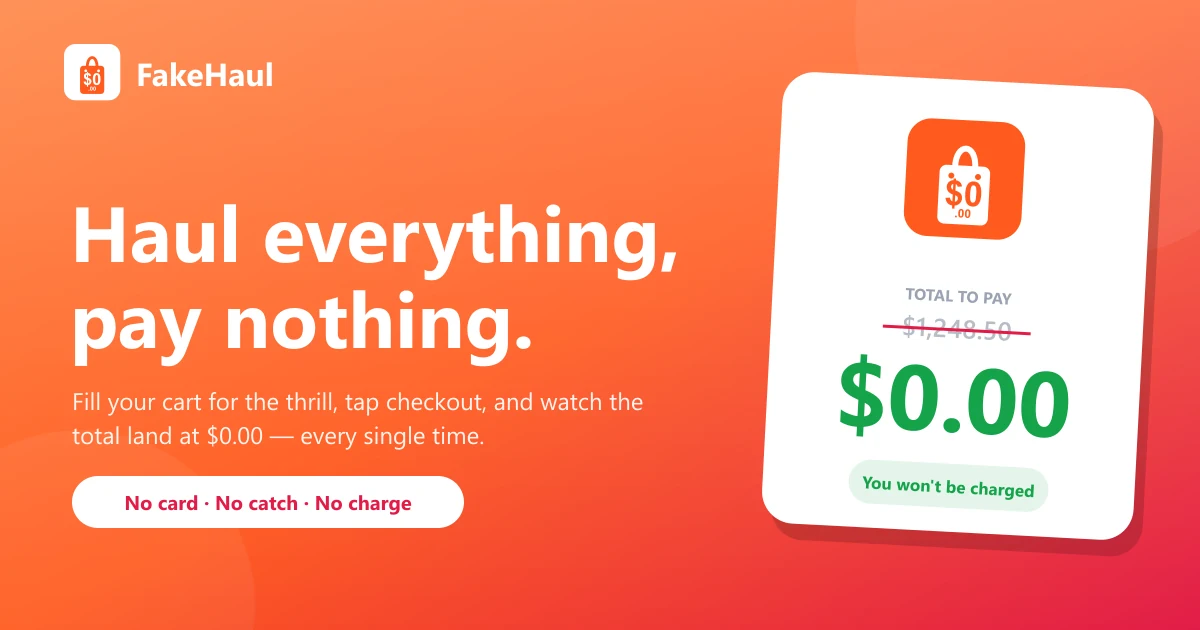
FakeHaul
A fictional marketplace I built with coding agents and offline AI pipelines, where every checkout ends at $0.00.
-
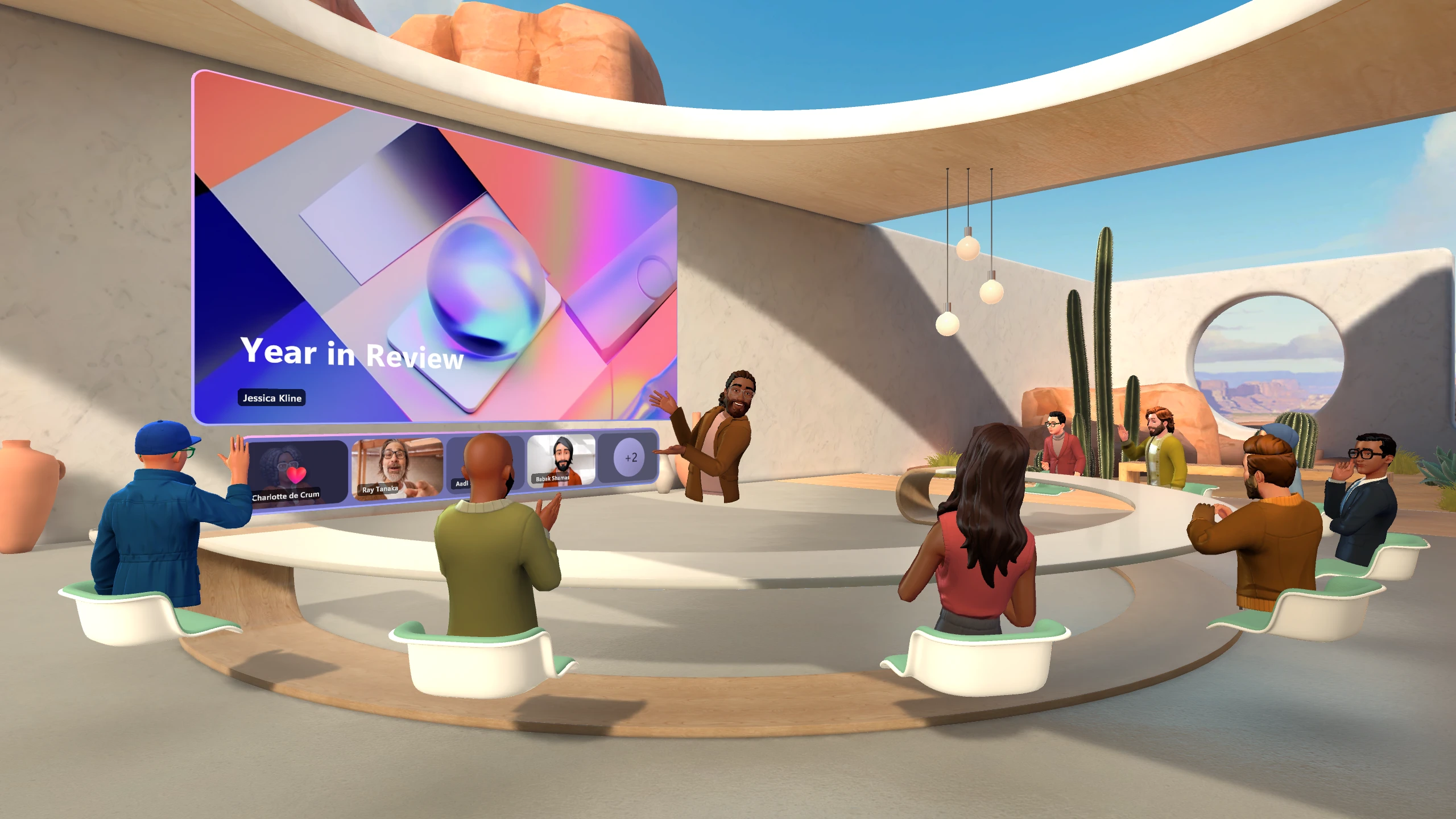
Microsoft Mesh & Avatars for Teams
The shared UI framework every Mesh product team adopted, plus avatar editing and rendering across mobile, desktop, and AR/VR.
-
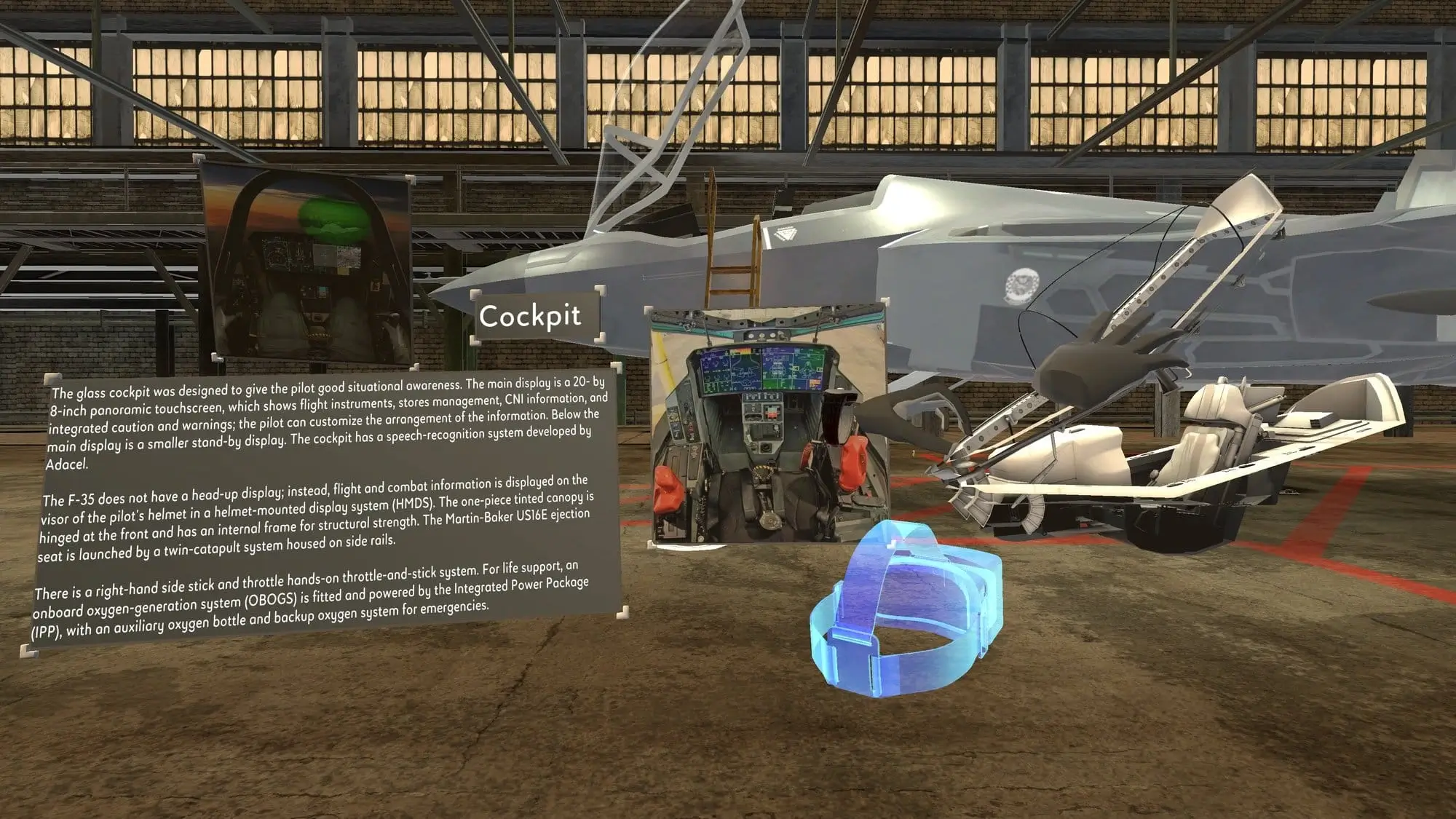
Holos
Hand interaction, multiplayer networking, and 3D content workflows I built for Holos’s AR and VR training platform.
Experience
Résumé (PDF)Industry
-
to PresentNow
Microsoft Teams AI
Software Engineer II- Build Facilitator, a meeting agent for Microsoft 365 Copilot that takes live notes, tracks agendas and decisions, and answers questions in Teams.
- Design the turn-taking layer of a proactive agent, deciding when and how the AI speaks into a live group conversation without interrupting.
- Contribute to conversation orchestration, tool calling, context management, observability, and multimodal LLM features.
-
toCase study
Microsoft Mesh
Software Engineer II, Mixed Reality- Engineered the shared UI framework behind Microsoft Mesh and Avatars in Teams for millions of users, defining reusable interaction patterns, input abstractions, accessibility integration, and spatial UI components adopted by every Mesh product team.
- Built avatar customization systems with weekly releases in 20+ languages. Satya Nadella showed the outfit-selection flow I built at Microsoft Ignite.
- Key contributor to the avatar rendering and performance pipeline across HoloLens, Quest, web, and desktop. Profiled CPU and GPU frame budgets, using LOD switching and GPU instancing to maintain target framerates on constrained hardware.
-
toCase study
Holos
AR/VR Interaction Engineer- Built core AR and VR training platform capabilities, including hand tracking, gesture recognition, multiplayer networking, and 3D model ingestion workflows.
- Worked with leadership on product and engineering execution, helping Holos secure a $750K U.S. Air Force contract and a place in Techstars.
Research
-
toCase study
Kats Research Group
XR Researcher- Developed a computer vision model that simulates color vision deficiency in hyperspectral images with 90% accuracy, and ran it in a color-calibrated Oculus Rift demo. Co-authored an arXiv publication.
-
toCase study
UW Graphics Group
Graphics Researcher- Built a real-time VR control loop mapping hand gestures to remote robotic-arm manipulation, plus a Unity UI for replaying arm motion from 15+ lab-experiment datasets.
-
to
UW Human-Computer Interaction Group
HCI Researcher- Added speech recognition and NLP-driven interaction to children’s reading-companion robots.
- Designed and built a collaborative-filtering recommender system, successfully trialed with eight families.
Education
Degrees
-
to Expected
Georgia Institute of Technology
M.S. in Computer Science (HCI)- Human-Computer Interaction specialization.
-
to
University of Wisconsin–Madison
Bachelor of Science- Double-majored in Computer Science and Communication.
- TA for CS 559 (Computer Graphics) for 2 semesters.
Certifications
- Machine Learning SpecializationStanford University
- Human-Computer Interaction Professional CertificateGeorgia Tech
- Computer Vision NanodegreeUdacity
- VR Development Professional CertificateUC San Diego
- Virtual Reality SpecializationUniversity of London
- Interaction Design Specialization CertificateUC San Diego
Publications
-
Too Late to Rely: A Self-Concealing Failure in State-Only Transcript Grounding Trackers
Transcript-based trackers that keep only the latest state can hide their own failures: if someone acts on a decision before the conversation supports it, later agreement overwrites the warning that they acted too early. Used a 264-dialogue benchmark to show the failure and test an event-sourced record that preserves those warnings.
-
Passive frequency conversion of ultraviolet images into the visible using perovskite nanocrystals
Co-authored a peer-reviewed paper on a passive system that converts ultraviolet images into visible light using perovskite nanocrystals.
-
Breaking Binocular Redundancy Through Virtual Reality
Wrote a technical report and released an open-source VR demo that simulates static and dynamic binocular rivalry.
-
Effective Leaders: Four Attributes That Underpin The Core Characteristics of Effective Leadership
Contributed the article “Critical Conversation” to Mike Cameron’s collected volume.
Writing
All writing- I leave AI models constantly. I have never once left the platform. Medium (opens on Medium)
- I built a fake shopping app. Nothing ships. It might be the most useful thing I’ve made. Medium (opens on Medium)
- My Top 5 Books of 2025 Medium (opens on Medium)
- Making a Comeback Antaeus AR (opens on Medium)